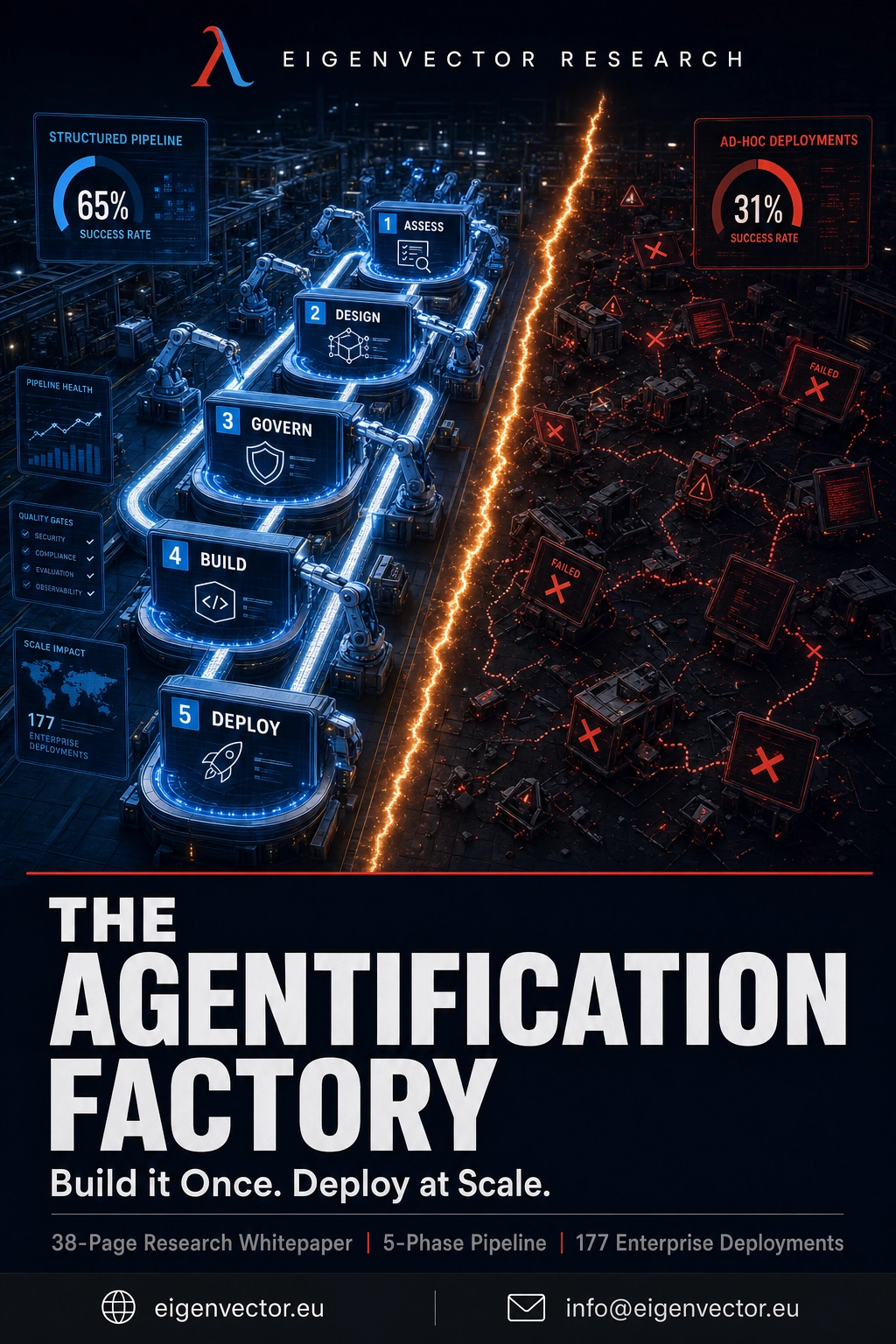
An Agentic Process Automation Factory is an industrial model for redesigning processes, deploying autonomous systems, proving value, and evolving the workforce in parallel. Four components make it work.
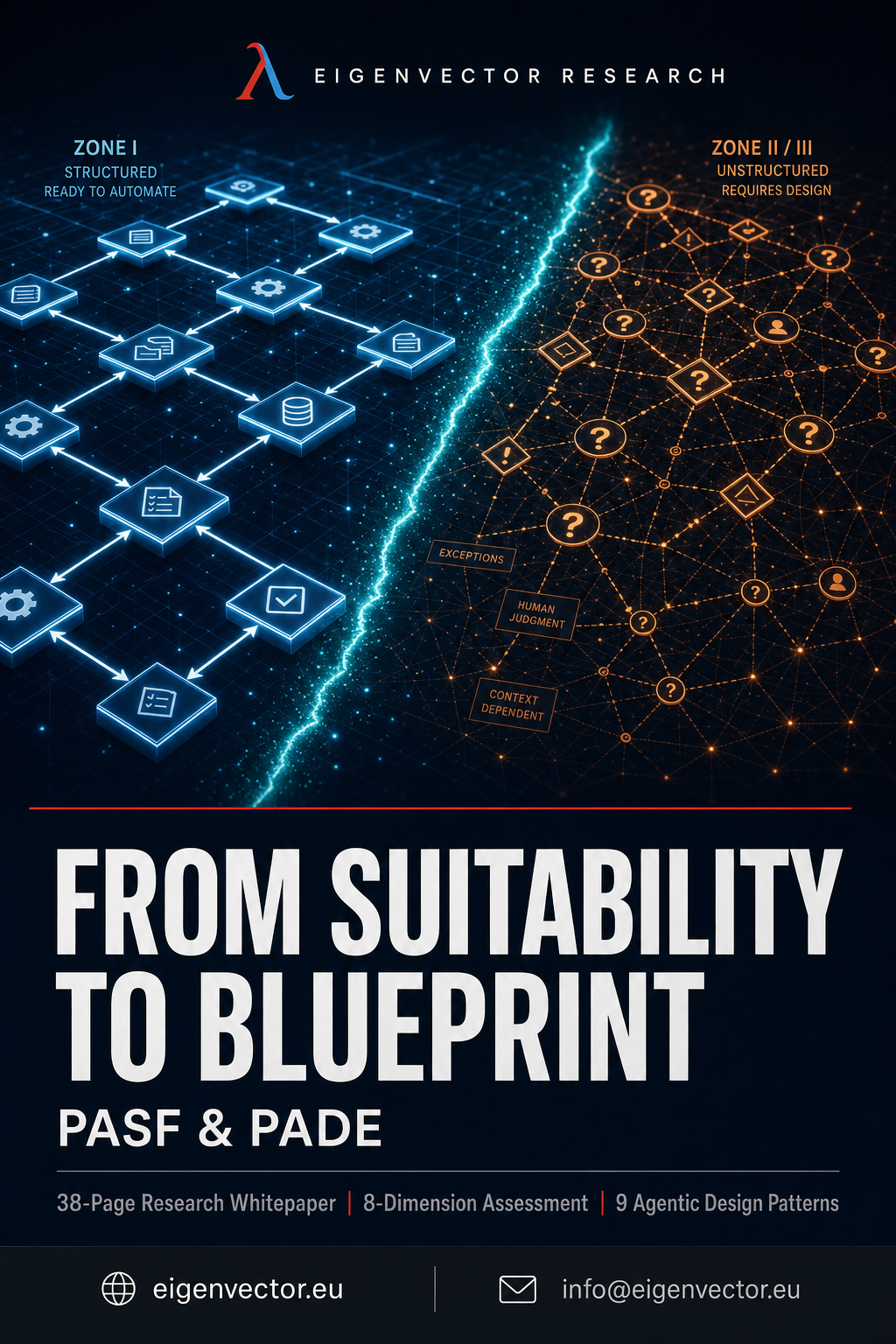
Business Process Reengineering comes first, because automating a broken process produces a faster broken process. Informed by our PASF and PADE research, this layer analyses, redesigns, and standardises workflows before automation begins. Process suitability depends on structurability, reversibility, risk, exception density, and data quality. Some workflows are clean highways. Others need to be rebuilt before anything touches them.
The Agentification Factory converts redesigned processes into operational architectures of AI assistants, tool-using agents, multi-agent workflows, browser automation, human-in-the-loop approvals, and event-driven orchestration. The PADE framework makes clear that not every task needs a fully autonomous agent. The intelligent move is architectural matching, not ideological overuse of autonomy. For complex or high-risk environments, every proposed agent action passes through the Ontological Compliance Gateway, validated for semantic coherence and policy compliance before execution.
The Evidence Factory is the measurement and assurance engine. It continuously captures proof that automations create business value while remaining compliant, auditable, and within control boundaries. The Process Automation Value Model links process characteristics to outcomes including FTE capacity released, cost savings, cycle-time reduction, and net program value. The OCG architecture adds cryptographically signed evidence bundles for every validated agent action, creating audit records that survive regulatory scrutiny.
Change and HR Transformation manages the workforce side. Released capacity needs somewhere to go. Role decomposition, augmentation mapping, capability development, and internal redeployment ensure that automation upgrades the organization rather than quietly hollowing it out.
The four components operate as a closed loop. BPR redesigns work. The Agentification Factory converts it into intelligent execution. The Evidence Factory proves value and control. Change and HR evolves the workforce around the new model. Evidence then feeds back into BPR for the next wave. That is the difference between a real factory and a corporate AI petting zoo full of pilots nobody remembers six months later.
Download our Agentification Factory Whitepapers
These whitepapers are the result of 177 agentic deployments across the globe